
Blog
Compassion and Empathy
I adore these two quotes, they came to mind just before the New Year. I have had a number of new patients in the 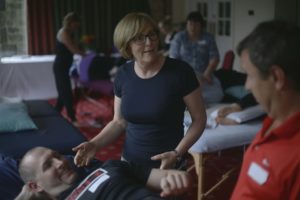 clinic who have walked in with statements such as ‘Have you checked your website as it’s really awful!’ or ‘What makes you so special’ or ‘I am sure you will be as good as ‘ Sarah’, all conveyed in a rather aggressive tone. I am sure we all treat these kinds of people.
I treated each of these people very successfully, and kept them on as long term ‘wellness’ patients
It did lead to me to reflect how we get these patients to feel at ease, enabling us to treat them. I believe we have our principal ethics of empathy and compassion, embodied within us. These two quotes describe this well.
“Compassion: is not a relationship between the healer and the wounded. It’s a relationship between equals. Only when we know our own darkness well can we be present with the darkness of others. Compassion becomes real when we recognize our shared humanity.”
Pema Chödrön, The Places That Scare You: A Guide to Fearlessness in Difficult Times
“Empathy: The most powerful tool of compassion, empathy is an emotional skill that allows us to respond to others in a meaningful, caring way. Empathy is the ability to understand what someone is experiencing and reflect that understanding back.”
Brene Brown, Rising Strong
What is added to this is our values, and our firm believe that each person has the right to been seen as unique, not judged just accepted wholeheartedly. So they feel safe within their own fear, anxiety, and this is what makes the difference. People relax when they feel they don’t have to defend, feel they can let their guard down, leaving the nervous system calmer more able to be open for treatment. It is such an honour and privilege to witness people open to their own moment of deciding now is the time for change and trusting us with that process.
I find The Hendrickson Method is especially pertinent for me in that it allows me to be still within myself, which enables my own clarity of mind to be able to check in with my own stress, judgements or anxiety, which in turn allows me to come from a wholehearted non-judgmental place.
At this moment in time, when the world in general is not offering empathy and compassion, maybe we can effect change for people in their world which in turn affect others in theirs.
Introduction to Hendrickson Method – (2 days)
13th & 14th May 2017
I have been invited to present a two day Introduction to The Hendrickson Method at Chapel Allerton Pilates in Leeds, which feels really interesting and thought-provoking. More and more I am investigating movement and manual therapy. We can’t have one without the other, but bringing them together we can best enable our patients.
This 2 day workshop is designed to give massage therapists, physiotherapists, osteopaths, chiropractors and Pilates instructors the opportunity to explore the Hendrickson Method without embarking on the full programme to discover if this technique will be beneficial to their practice.
Here are the four main aims of the workshop:
Review the musculoskeletal anatomy of the spine;
To practice and understand the application of wave mobilisation® ;
To explore the theory and practice of the Hendrickson Method soft tissue mobilisation;
To feel confident in applying a spinal protocol.
“When we give an HM treatment, we are intentionally communicating very specific information to our client/patient’s nervous system through our hands and heart. The message that comes through is, “You are safe. You are cared for.” The client/patient relaxes and we gain access into their parasympathetic nervous system. This allows the HM protocol of soft tissue mobilization, joint mobilization and METs to affect deep changes in the body much more efficiently and effectively” – Thomas Hendrickson
Attendees will require a copy of:
Massage and Manual Therapy for Orthopaedic Conditions 2nd Edition by Thomas Hendrickson
The weekend is 13th & 14th May 2017
Price £260.00
For booking contact Claire Sparrow at Chapel Allerton Pilates
07931 56520
Led By: Sue Bennett
Included: Light refreshments
Dress Code: Loose, comfortable, smart
Duration: 2 Days
Times: 09.00 – 18.00
FOUR KEY TOOLS FOR DEALING WITH SI JOINT DYSFUNCTION
A few weeks ago I had the pleasure of running a four-day workshop on the lower extremities with the Hendrickson Method.
It was a wonderful few days of sharing ideas and developing techniques, and I love how these workshops are especially thought provoking for me as the teacher. I hear all sorts of insightful questions and discussions, and I would like to share one topic in particular, which I have since reflected on greatly: shedding light on SI joint dysfunction.
In Massage World recently there was an article by John Gibbons http://www.johngibbonsbodymaster.co.uk/training/articles/) on this topic, titled ‘Body Master’, a well written and informative article which led me to think more on assessment protocol, for SI joint dysfunction.
Assessment protocol has been a divisive topic over the years, covered by many different accepted and rejected books, which respectively has helped me develop the fundamentals of good assessment. However, I have found in clinic that for 80% of the people I treat this basic protocol is beyond them, and not enough to understand the full extent of a complex problem. For patients with ME, chronic pain, and chronic fatigue syndrome or disc issues basic assessment techniques intimidate the patients, and I question how much information we even gather from this as a result.
So, my four key tools to discover the source of the problem:
1.) Begin by knowing that the subjective assessment has to be lengthy. This allows us to create an accurate whole picture, as most of our patients with LBP present with an acute episode which is coupled with a chronic condition.
2.) Have the patient standing fully clothed, (allowing them to feel comfortable and at ease) preferable in loose clothing, in order to accurately assess posture. Look for how the patient stands, pronation or supination, tight short v long weak. Is there an anterior or posterior tilt? Do they have rounded shoulders?? Observe how the clothes are hanging, all giving us information we need to build a picture that can tell us were the imbalance begins, to create the pain/dysfunction at the Si joint.
3.) Palpate to feel the tension within the muscles, carefully feeling and tracing lines of tension and dysfunction.
4.) Use MET (muscle energy techniques) to gently assess firing quality.
The important thing to remember is that if our anatomy is solid, we will always then be able to understand the impact of muscles working reciprocally around the body. Exploring and understanding all the muscles which attach above and below the pelvis, gently checking for function, will tell us the imbalance which would lead the SI joint being restricted or give us the source of acute pain.
SI joint discomfort is at the end of the day only a messenger, letting us know when an imbalance is occurring which needs to be addressed.
Hope this is helpful
Meet & Match
Recently at workshop the tutor kept talking about ‘meet and match’ your patient.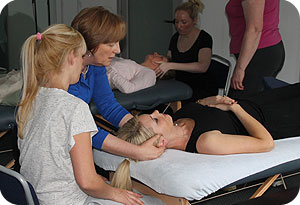
This was told to us several times throughout the workshop. It set lots of reflection with in me, as my experience was that I wasn’t being ‘met and matched’.
Here at Flexible-Healing we do talk about how do we ‘meet‘ the person? We are about to treat.
- Are we still & calm enough within ourselves to hear the patient’s true story of the injury/chronic pain. Being able to sit comfortably with empathy
- Are we open to the patient space that is required to feel their energy, to breath with ease, to be able to match their rhythm
- Do we sit comfortable in our own knowledge, with constant open curiosity that leads to the deepening our understanding of their needs.
These were just my first reflections